Laser-Assisted Endodontics
Laser disinfection
Laser-assisted endodontics brings advanced laser light technology to root canal disinfection. Traditional chemical rinses cannot always penetrate the microscopic dentinal tubules that branch off the main root canal. The laser beam, transmitted through a microscopic fibre-optic tip, reaches deep into these tubules to eliminate bacteria and vaporise infected tissue, ensuring unmatched sterility.
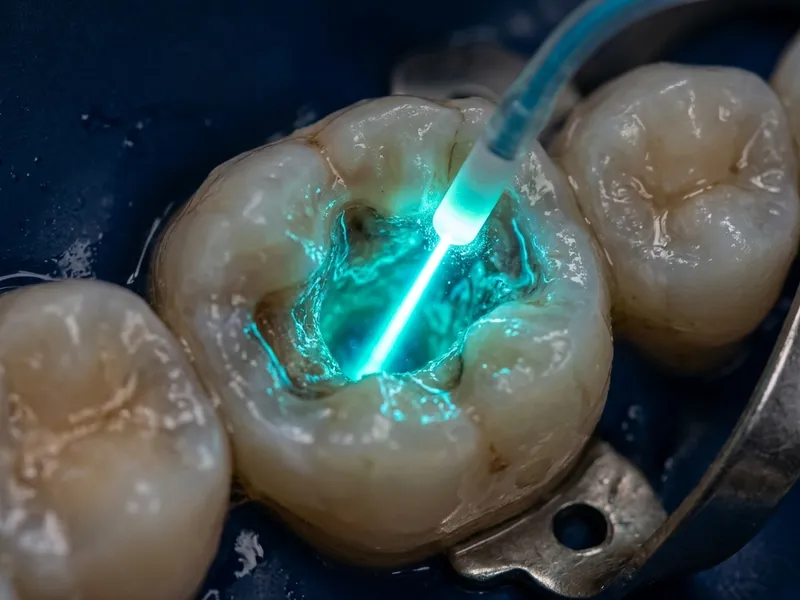
Laser-Activated Disinfection (LAD)
Shwetha Dentistry features specialised dental lasers calibrated for endodontics. By combining laser light with chemical irrigants, we trigger micro-acoustic waves that thoroughly flush and sterilise the entire root canal system.
99.9% bacterial elimination
Vaporises pathogens hiding deep within microscopic tubules.
Biostimulation effect
Laser energy stimulates the bone at the root tip, accelerating healing.
Conservative openings
Sterilises canals through narrower, tooth-preserving access holes.
Who is it for?
- Patients with chronic or recurrent root canal infections
- Teeth with severe bacterial biofilms that resist chemical cleaning
- Patients with abscesses or large bone infections at the root tip
- Individuals who want the highest protection against reinfection
What to expect
The procedure begins like a standard root canal, but after shaping, a thin laser tip is introduced. You will hear a soft clicking sound and may feel a gentle warming sensation in the tooth, but no pain. The laser tip is rotated inside the canal to sterilise the walls within minutes.
Performed at Shwetha Dentistry by our specialist endodontic team.
The Procedure, Step by Step
Exactly what happens during your laser-assisted endodontics — no surprises.
Shaping & Debridement
Shaping & Debridement
Shaping the root canals with rotary files to prepare the path for the laser fibre.
Standard access is created and the main root canals are cleaned and shaped using flexible rotary NiTi files, establishing a clear path for the laser fibre-optic tip to travel down the canal.
This removes the bulk of the infected pulp, clearing the way for deep light sterilisation.
Laser Fibre Insertion
Laser Fibre Insertion
Inserting the flexible, microscopic optical laser fibre to the depth of the root.
A microscopic, highly flexible optical fibre connected to our specialised dental laser is carefully inserted down the shaped canal, guiding the laser energy precisely to the apex of the root.
The thinness of the fibre allows it to navigate curved roots without changing the canal shape.
Light Disinfection
Light Disinfection
Activating the laser to sanitise the main canal and microscopic lateral tubules.
The laser is activated and moved in slow, upward spiral motions. The light energy targets and vaporises bacteria, fungi and viral structures, breaking down tough bacterial biofilms that resist chemical cleaners.
The laser light travels through the dentine wall, killing bacteria hiding deep in lateral micro-tubules.
Laser Fluid Activation
Laser Fluid Activation
Using laser pulses to trigger micro-acoustic waves in cleaning fluids.
Sanitising fluids are introduced into the canals and activated with low-energy laser pulses, creating rapid micro-fluid currents and acoustic waves that flush organic debris from microscopic corners.
This combines chemical rinsing with light energy, reaching parts of the tooth that files cannot touch.
Root Sealing
Root Sealing
Drying and sealing the sterile canal system with bioceramics.
After the laser treatment, the completely sterilised root canal is dried using paper points and filled with a biocompatible sealer and gutta-percha to prevent future contamination.
A sterile seal protects the root, allowing the surrounding bone and gum tissues to heal.
Treatment Cost
₹6,000 – ₹8,500
1 visit (50–65 minutes)
Indicative range — please consult the dentist; the exact price varies from case to case.
Aftercare
- Avoid chewing hard foods with the treated tooth until it is crowned.
- Take prescribed medication to assist with root-tip healing.
- Maintain routine brushing and flossing around the tooth.
- Keep up with regular follow-up dental hygiene check-ups.
Frequently Asked Questions
No. The laser operates in fast, microsecond pulses and is used alongside water irrigation. You will not feel any heat or pain — at most a gentle warming sensation.
Laser disinfection adds a minor cost due to the specialised laser fibres used, but it significantly increases the long-term success rate of the treatment, making it highly cost-effective.
The laser sterilisation step adds only about 5 to 10 minutes, so the entire appointment still fits comfortably within a single one-hour visit.
No. The laser wavelengths are specifically chosen to target water, bacteria and pigments in infected tissue, leaving the healthy hard dentine completely undamaged.
Lasers cannot drill through solid calcium blockages, but they are excellent at sterilising the small spaces past the blockages once we open the pathway using microsurgical ultrasonic tips.
Yes — it is highly safe and often preferred for children because it is quiet, sterile and promotes faster healing of developing bone tissue.
No dental treatment carries a 100% guarantee, but laser disinfection dramatically reduces the chance of reinfection, which is the primary cause of root canal failure.
Wait until the local anaesthesia wears off to avoid biting your cheek or tongue. Once the feeling is back, you can eat soft foods.
Low-level laser light penetrates the surrounding bone tissue, stimulating blood circulation and cellular repair mechanisms to speed up the healing of infections.
No. It requires specialised laser equipment and advanced training. Shwetha Dentistry is one of the few clinics in North Karnataka offering this technology.